Barak
is a supersonic, vertically-launched short range air defense system, with an
operational range of about 10 km/ 6 miles. That pushes it past the standard
ranges of shoulder-launched options with naval counterparts, like the MBDA
Mistral/SIMBAD or Saab Boofors’ RBS-70, but short of other small vertical
launch options like the RIM-162 Evolved Sea Sparrow. Its closest western
competitors on the international market are probably Raytheon’s
horizontally-fired Amero-German RIM-116 Rolling Airframe Missile, and MBDA’s
flexible Crotale VT-1/NG. Key attributes include a compact 8-cell vertical
launching system that weighs just 1,700 kg, coupled with an equally compact
1,300 kg fire control system. This makes it easier to install in small ships,
and to retrofit into older vessels.
India bought over $300 million worth of these missiles as a
substitute for the indigenous but long-delayed Trishul (“Trident”) missile
project, and Barak systems now equip India’s lone aircraft carrier INS Viraat,
all 6 Project 16/16A Godavari/ Brahmaputra Class 3,850t frigates, 2 of 6 Rajput
Class 4,974t destroyers, and the 3 new 6,200t Shivalik Class frigates. Current
missile stocks aren’t adequate to cover that, and readiness requires regular
training launches against live targets. Barak-1 missiles are also supposed to
be part of upgrades to India’s 3 Delhi Class 6,200t destroyers, in order to
remove the hole created by the Russian SA-N-7C ‘Gollum’ air defense missile
system’s limited firing arc.
Barak-1 missiles are also supposed to be part of upgrades to
India’s 3 Delhi Class 6,200t destroyers, in order to fix the SA-N-7C ‘Gollum’
air defense missile’s limited firing arc. The missile’s fast response time,
effectiveness against missile threats, and compact size are considerable
assets, but they are currently offset somewhat by its short range.
Next Generations Barak-8
The Navy’s Barak-NG/ LR-SAM project aimed to give India’s
naval defences a much longer reach, with the intention of eventually making it
India’s primary naval SAM. The project was later renamed Barak 8, and aims to
deliver 60-70 km/ up to 42-mile range, thanks to a dual-pulse solid rocket
motor whose second “pulse” fires as the missile approaches its target. This
ensures that the missile isn’t just coasting in the final stages, giving it
more than one chance at a fast, maneuvering target.
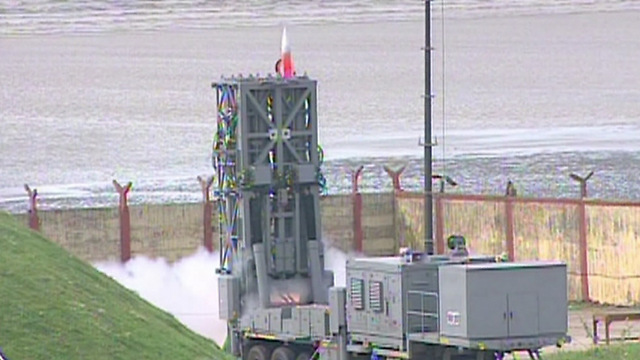
The missile’s most important feature may be its active
seeker. Instead of forcing its ship or land-based radar to “paint”/illuminate
its target at all times, the Barak 8 can be left alone once it is close to its
target. This is an excellent approach for dealing with saturation attacks using
older ship radars, which can track many targets but illuminate just a few. It’s
also very useful for land-based systems, which will survive longer against
enemy anti-radar missiles (ARMs) if they can turn themselves on and off to
confuse enemy seekers, without worrying that they will lose all of their
effectiveness. That kind of performance vaults the Barak 8 past widespread
options like the RIM-162 ESSM, or entries like VL-MICA on land. Though the
Barak-8 may compete globally with those systems, a better comparison would be
naval missiles like Raytheon’s SM-2 Block IIIA and MBDA’s Aster-15, or
land-based options like the Patriot. The Barak 8’s active seeker would even
give it a performance advantage over the SM-2, and corresponds more closely to
the SM-6 currently in development.
Specifications
Type
|
Parameter
|
Type
|
Long-range
surface-to-air missile
|
Place of origin
|
India, Israel
|
Used by
|
Indian
Navy
Indian
Air Force
|
Designer
|
Israel Aerospace Industries,
DRDO and BEL
|
Mass
|
275kg
|
Length
|
4.5m
|
Diameter
|
0.54m
|
warhead
|
60kg
|
Engine
|
Two
stage, smokeless pulsed rocket motor
|
Wingspan
|
0.94 m
|
Operational range
|
0.5–100
km
|
Flight ceiling
|
16 km
|
Speed
|
Mach
2 (680 m/s)
|
Guidance
system
|
Two way data link
Active RF/IIR
seeker
|
Launch
|
8
cell VLS module
|
platform
|
8 cell,double
stacked land launcher
|
The naval Barak-8 reportedly maintains its principle of using
compact launchers and systems. Its ancillary capabilities will always depend on
the radar and combat system aboard its ship. One wild card is the Barak’s
potential use in a point defense role against ballistic missiles, a role that
can be played by some of its more advanced competitors on land or sea. This
capability is implied in the land-based system’s name, but hasn’t been
discussed publicly, or validated in publicly announced tests. The land-based
Barak 8 Air and Missile Defense (AMD) system includes several components:
- RAFAEL supplies the Barak-8 interceptor missile, which remains vertically launched.
- The battle management, command, control, communication and intelligence center (BMC4I) is produced by the MBT Division of IAI’s Missiles, Systems, and Space Group; it offers both stand-alone operation for a single fire unit, and joint task force coordination (JTC).
- IAI ELTA Systems Ltd. supplies the Land-Based Multi-Function Surveillance, Track & Guidance Radar (LB-MF-STAR), a rotating S-band digital Active Electronic Steering Array (AESA) Radar System that can deliver an accurate, high quality arena situation picture, and extract low radar cross section targets like stealthy cruise missiles, even in the toughest environmental conditions. The naval MF-STAR is expected to be part of Israel’s next-generation missile frigates.
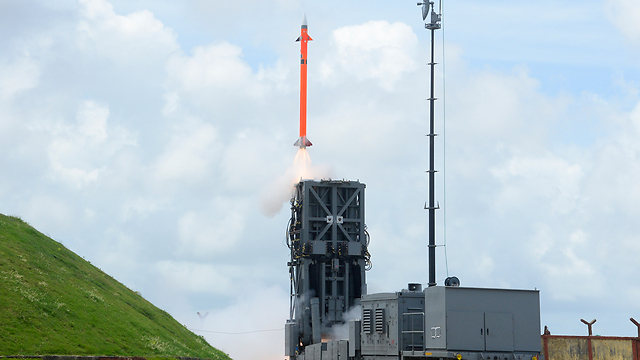
In Israel, the Barak-8 is slated to equip its next-generation frigates and may find its way to other roles. India expects to field the missiles on land and sea. Beyond those 2 countries, export prospects beckon for a missile that may offer a value-priced naval alternative to Raytheon’s Standard-2 and MBDA’s Aster-15. According to Defense News, the Barak-8 project features funding from American military aid dollars, as well as Indian cooperation and private/governmental funding in Israel. An Israeli source, on the other hand, has told DID that the USA has no claim on the Barak-8’s intellectual property. DID has been unable to verify he exact situation; but if the USA has no IP or significant American-made components in the Barak AMD system, it would have implications for both procurement funding sources and export policy.
India’s Barak Programs, Navy: LR-SAM
India has 2 different programs that could use the new
longer-range Barak missile. The naval Barak-NG, or LR-SAM deal, was the first.
Signed in 2006, it’s worth INR 26.06 billion (about $591 million at
then-conversion) as of December 2009. India’s Navy has decided as a matter of
policy that it will only mount medium-long range surface-to-air missile systems
on future warships, as opposed to depending on short range systems that might
protect a ship, but don’t offer layered defense for the rest of the fleet. This
was an early sign of its transition to a more of a “blue water” navy that can
reach into high-threat areas, and a logical complement to India’s establishment
of a serious carrier force beginning with INS Vikramaditya (ex Admiral Gorshkov
external link). Hence the 2006 Barak-NG naval agreement, which gives India an
upgraded version of a familiar system, extends India’s technological
capabilities, fosters economic ties and integration at sub-component levels,
and helps the Israelis build a new system that meets some of their own emerging
requirements. The new system would reportedly have a range of 50-60 km. Making
that happen required some loosening of bureaucratic constraints on India’s
defense industry.

Israel Aerospace Industries will be the key partner, and will
contribute most of the applicable technology, just as Russia did for the
BrahMos by offering its SS-N-26 Oniks missile as the base platform. 2011
Barak-8 materials show Indian firms contributing the dual-pulse rocket motor,
associated motor arming/safing mechanisms, and the pneumatic actuation system.
On the other hand, India Defence reports that IAI and its Israeli partners have
agreed to transfer all relevant technologies and manufacturing capabilities to
India. he LR-SAM project is now slated for completion by December 2015, which
would be about a decade from its 2005 project approval to fielding. Israel will
be ahead of that schedule, as they began steps to field Barak-8 in their navy
in mid-2013.
Background
Barak 8 is loosely based on the original Barak 1 missile and
is expected to feature a more advanced seeker, alongside range extensions that
will move it closer to medium range naval systems like the RIM-162 ESSM or even
the SM-2 Standard. Israel successfully tested the improved Barak II missile on
July 30, 2009. The radar system provides 360 degree coverage and the missiles
can take down an incoming missile as close as 500 meters away from the ship.
Each Barak system (missile container, radar, computers and installation) costs
about $24 million. In November 2009
Israel signed a $1.1 billion contract to supply an upgraded tactical Barak 8
air defence system to India. In May 2017, India placed an order of $630 million
for four ships of the Indian Navy. In
September 2018, MDL and GRSE awarded Bharat Electronics Limited with a $1.28
billion contract to supply seven Barak-8 air defence systems for Project
17A-class frigates. In October 2018, Bharat Electronics Limited signed a $777
million deal with Israel Aircraft Industries to help fulfil the Barak-8 order.
Israel Aerospace Industries describe Barak 8 as "an
advanced, long-range missile defense and air defense system.
- Long Range
- Two-way data link (GPS S band)
- Active Radar Seeker Missile
- 360-degree coverage
- Vertical Launch
- Multiple Simultaneous Engagements
- Point defence anti-ballistic missile.
MRSAM is the land-based configuration of the missile. It
consists of a command and control system, tracking radar, missile and mobile
launcher systems. Each launcher will have eight such missiles in two stacks and
are launched in a canister configuration. The system is also fitted with an
advanced radio frequency (RF) seeker. The Indian Army ordered five regiments of
this version, which consists of about 40 launchers and 200 missiles for ₹17,000
crore (US$2.4 billion). It is expected to be deployed by 2023 with first
deliveries commencing in 2020.

LRSAM (Barak-8ER)
An ER (extended range) variant of the Barak 8 is under
development, which will see the missiles maximum range increased to 150 km.[20]
Designed to engage multiple beyond visual range threats, the low launch signature
Barak-8ER is understood to retain the same autopilot/inertial navigation system
and active radar seeker guidance as the Barak-8, although some modifications to
the software and to the missile control surfaces are likely. The booster
increases the length of the missile at launch from its current 4.5 m to nearly
6 m, although the length in flight after the booster has been jettisoned may be
slightly less than the base Barak-8 missile, if a TVC is not present. The
missile diameter and fin spans are thought to be the same as the base Barak-8.
The booster weight is currently unknown, although the missile's weight after
the booster has been jettisoned is the same as that for the current Barak-8
configuration.


No comments:
Post a Comment