The
urgent need for modern-day rotor-wing gunships, which could be operated at high
altitudes, was first felt during the Kargil conflict. While the upgrade of the
present fleet of attack helicopters has addressed major issues regarding
avionics and weaponry, the limitation in respect of high-altitude operations
remains. Also, a need has been felt to increase the numbers beyond the present
two squadron strength to cater for the current employment philosophy in support
of the Cold Start Doctrine. TheHAL Light Combat Helicopter (LCH) is a
multirolecombat helicopterbeing developed by Hindustan Aeronautics Limited
(HAL) for use by the Indian Armyand the Indian Air Force. The LCH is a
derivative of theALH, Dhruv. Using a proven helicopter as the base platform has
considerably conserved the project costs and timeline for the LCH.
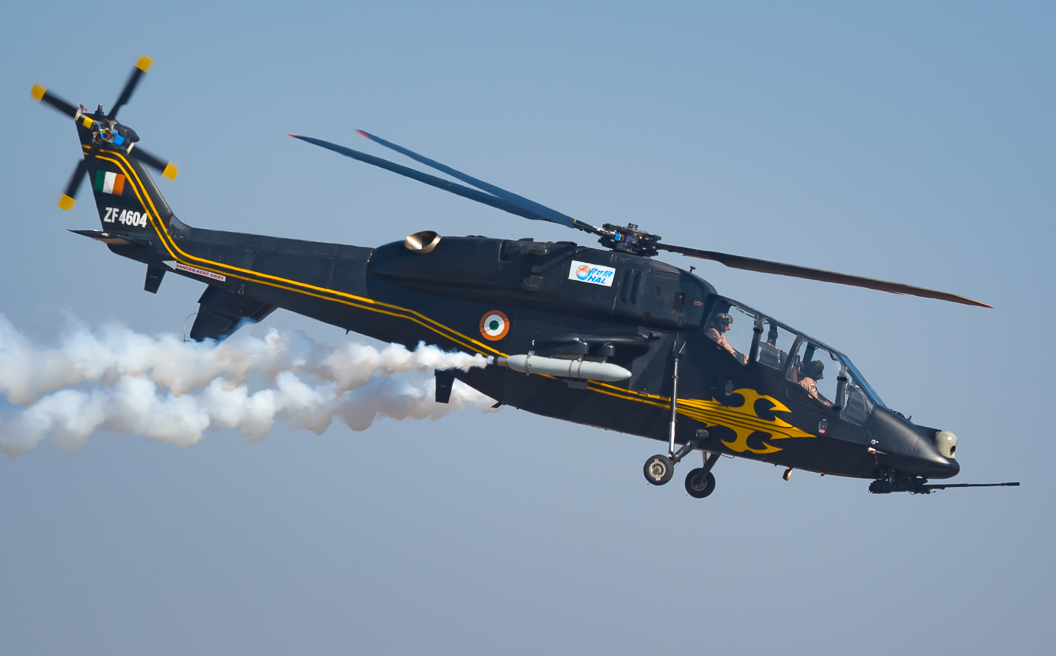
The LCH has been provided with features
comparable to the contemporary attack helicopters of the world. All aspects of
cockpit ergonomics, sighting and targeting systems, weaponry and survivability
have been well designed and developed making it a potent, modern fighting
machine. The LCH will have a maximum take-off weight of 5700 kgs. Future
prototypes are expected to have a higher percentage of composite material in
the structure. It is intended for use in air defence against slow moving aerial
targets (helicopters and UAVs), destruction of enemy air defence operations, escort
to special heliborne operations (SHBO), and support of combat search and rescue
(CSAR) operations. The helicopter is powered by two ‘Shakti’ turboshaft engines
which the HAL has developed along with Turbomeca Company of France. Designed
for antitank, anti-infantry and scouting roles with a maximum speed of 275
kmph, it will also be capable of high-altitude warfare since its operational
ceiling will be 16,000 to 18,000 feet (5,490m). The LCH has a glass cockpit
with multifunction displays. The sensor suite for target acquisition and
designation system, developed with the help of Israel, consists of CCD Camera
(digital imaging),

Forward looking infrared imaging (FLIR) technology and Laser range finder and laser designator. It facilitates target acquisition in all weather conditions and at night. Mission systems include a helmet-mounted sight for aiming the weapons, improving targeting and reducing work load of the pilot. Armament would include a chin mounted twin barrel 20 mm cannon, rockets and cluster bombs. According to HAL, the helicopter will be able to carry missiles for a variety of missions, including air-to-air, air-to-surface, and anti-radiation. The helicopter is to be fitted with a data link for network-centric operations facilitating the transfer of mission data to the other airborne platforms and ground stations operating in the network, facilitating force multiplication. The machine is a Low Observable (LO) design with reduced visual, aural, radar and infra red signatures.
Forward looking infrared imaging (FLIR) technology and Laser range finder and laser designator. It facilitates target acquisition in all weather conditions and at night. Mission systems include a helmet-mounted sight for aiming the weapons, improving targeting and reducing work load of the pilot. Armament would include a chin mounted twin barrel 20 mm cannon, rockets and cluster bombs. According to HAL, the helicopter will be able to carry missiles for a variety of missions, including air-to-air, air-to-surface, and anti-radiation. The helicopter is to be fitted with a data link for network-centric operations facilitating the transfer of mission data to the other airborne platforms and ground stations operating in the network, facilitating force multiplication. The machine is a Low Observable (LO) design with reduced visual, aural, radar and infra red signatures.

The redesigned
fuselage incorporates tandem seating (the two pilots in the LCH sit one behind
the other), compared to side-byside in the Dhruv. The design provides lower
radar cross section and the Infra Red (IR) signature due to hot exhaust gases
is lowered by providing IR suppressors for the engines. The LCH will
incorporate crash-worthy landing gear and armourprotection for better
survivability Survivability will also be ensured in the dense modern
battlefield through an electronic warfare (EW) suite procured from SAAB, South
Africa. The radar warning receiver (RWR) would warn against detection by enemy
radars.The laser warning receiver would warn the crew in case the helicopter is
being targeted by a laser designator. A warning would also be given, in case a
missile is approaching the helicopter, through the missile approach warning
system (MAWS). Later versions are also expected to have a Laser missile jammer,
which works by detecting and tracking the incoming missile and directing a
modulated laser beam at its infrared seeker to confuse the guidance system,
causing the missile to veer off course. According to estimates the LCH should
receive its Final operational clearance by 2013/2014 after which it will enter
service. HAL will supply theIndian Armywith 114 and IAF with 65 LCHs. These
would initially augment and subsequently replace the current machines. The plan
for expansion of Army Aviation envisages embedding attack and tactical assault
helicopters in the three Strike Corps of Indian Army, by integrating an
Aviation Bde each. They would also include reconnaissance and surveillance
helicopters for tactical battlefield employment and casualty evacuation. The
Army is contemplating acquiring 133 Light Utility Helicopters to replace the
ageing Chetak/ Cheetah fleet, for which the Eurocopter AS 550-C3 Fennea and
Kamov Ka-226 are in competition.
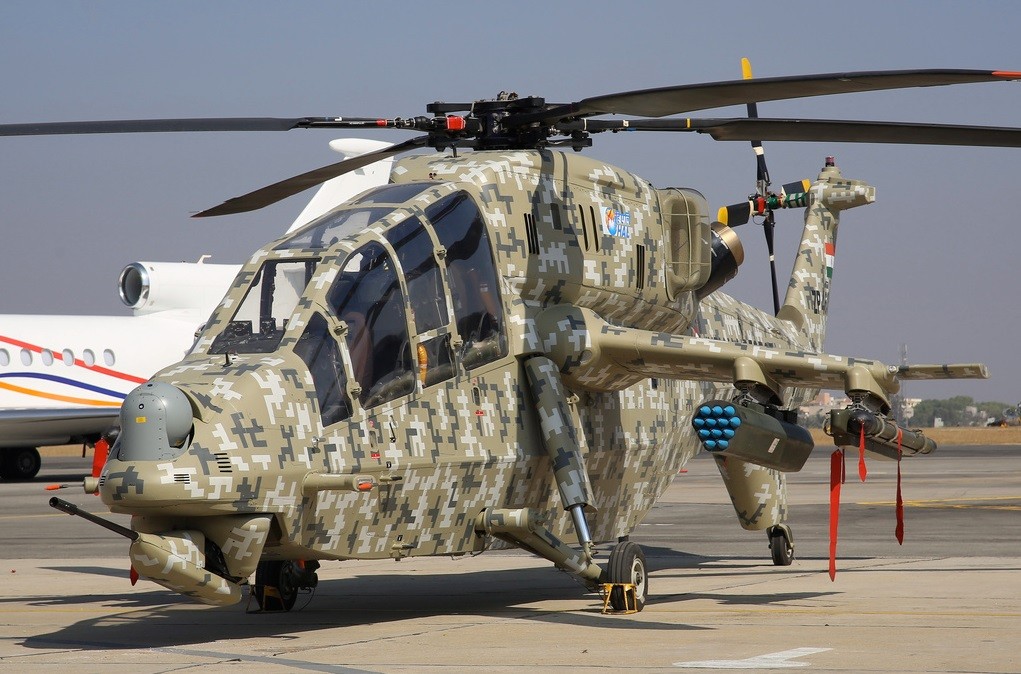
Light Combat Helicopter (LCH) was proposed to meet IAF’s
requirement of a dedicated light helicopter for combat operations. LCH has
maximum possible commonality with ALH. LCH with a narrow fuselage has pilot and
co-pilot/gunner in tandem configuration incorporating a number of stealth
features, Armour protection, Night attack capability and crash worthy landing
gear for better survivability.
- LCH Specifications
- Crew : 2
- Length : 15.5m
- Height : 4.7m
- Empty weight : 2550kg
- Loaded weight : 4000kg
- Useful load : 2950 kg
- Max takeoff weight : 5,500kg
- Powerplant : 2xHAL/Turbomeca Shakti Turboshaft, 900kW (1200 hp) each
- Maximum speed : 275 km/h (148knots,171 mph0
- Cruise speed :260 km/h (140knots,161 mph)
- Range : 700km
- Service ceiling : 6400 m
- Rate of climb : 12m/s
- Armament
- Guns M62 20 mm cannon on Nexter T turent
- Rockers Unguided rockets
- Missiles MBDA air-to-air missiles
- Air-to-surface missiles
- Anti-radiation missiles
- Helina ATGM
- Bombs Iron bombs
- Cluster bomb units
- Grande launcher
- Source: Indian Military Review, Volume 1, Number. 5, 2010, IDYB Group
- Additional Reading
- War or peace on the Indus? by John Briscoe
- Rethinking Our Mine Warfare Policy by Dhruv Katoch, CLAWS Website.

The major features of LCH are:
- Glass Cockpit
- Crashworthy bottom structure
- Crashworthy fixed tricycle type with tail wheel landing gear
- Canted flat panels for low Radar Cross Section
- Integrated Dynamic System
- Hinge less Main Rotor / Bearing less Tail Rotor
- Anti-Resonance Isolation System
- Integrated Architecture and Display System (IADS)
- IR Suppressor
- Counter Measuring Dispensing System (CMDS)
- EO pod, Helmet Mounted Display System & EW suite
- 20mm Gun, 70mm Rocket & Missiles
- Air to Air Missiles (ATAM)
- Air to Ground Missiles (ATGM)


No comments:
Post a Comment